Course language:
English
Course dates:
4–8 May 2026
The course takes place in Lund, Sweden, and lasts for five full days (Monday to Friday).
Participation fee:
SEK 27 000 (VAT exempted under applicable regulations)
currency convertor
The fee covers tuition, course materials, coffee breaks, lunches, social event (dinner), and course certificate.
The overarching objective of the course is to provide a thorough understanding of the fundamental principles behind building a Safe System in road traffic—a system in which severe injuries and fatalities are virtually eliminated. While the path to implementing a Safe System may vary depending on the current situation and local context, these core principles will consistently guide safety practitioners toward asking the right questions, and making right and informed decisions.

The Decade of Action for Road Safety, launched by the United Nations in 2011, resulted in only a marginal decrease in global traffic fatalities—from 1.3 million to 1.19 million deaths—falling far short of the original goal of a 50% reduction. Progress has been unevenly distributed: while most safety improvements occurred in European countries, much of the rest of the world has either stagnated or seen an increase in traffic-related deaths.
The experience of top-performing countries such as Sweden, Norway, and the Netherlands demonstrates that substantial and sustained safety improvements are possible—even after the most obvious interventions, or ‘low-hanging fruits’, have been exhausted. Much of their success is attributed to the implementation of the Safe System approach, a state-of-the-art framework for traffic safety management.
The Safe System challenges many of the long-standing assumptions that have shaped traditional road safety efforts. Grounded in a strong ethical foundation—the goal of eliminating all traffic fatalities and serious injuries—it offers a set of guiding principles and practical tools for safety work. While building a Safe System cannot happen overnight, systematic efforts based on sound knowledge inevitably lead to results, regardless of the starting point.
This course presents traffic safety as a broad and multifaceted subject, requiring collaboration among various components and stakeholders to achieve tangible results. Rather than focusing on narrow technical issues, participants will gain a holistic perspective on what needs to be implemented—and why—in order to save real lives in real traffic environments.
Course syllabus
The course will mix lectures with practical elements, mostly covering the following:
Framing the challenge
- Traffic safety situation today—for various contexts, accident types, and road user groups
- Evolution of traffic safety theory and practice
- Safe System and Vision Zero—state-of-the-art approach to traffic safety management
- How to measure traffic safety
- Traffic safety data—police, healthcare, in-depth investigation, insurance, indirect indicators and methods
- Why accidents happen? Contributing factors, causality chains, prevention strategies
- Biomechanics of injuries and injury prevention
- Suicides in road traffic
Solutions and implementtion areas
- Traffic safety measures: principles, classification, evaluations
- Traffic safety management
- Safe speeds
- Safe infrastructure
- Safe vehicles
- Safe road users
- Post-crash care
Perspectives on traffic safety
- Traffic safety as a part of sustainable development
- Meeting preconditions of various groups
- Safe active mobility
- Economic aspects of traffic safety
- Social aspects of traffic safety
- Safety in low-income contexts
Target group
The course is designed for professionals and academics having some basic knowledge in road traffic, but not necessarily specializing in traffic safety. It is suitable for those new to the subject, but also for seasoned professionals who want to learn more about the Swedish experience in traffic injury and fatality prevention.
The course suits well for participants with various professional backgrounds—engineering, law enforcement, public health, urban planning, mobility, sociology, economics, etc.
Course teachers
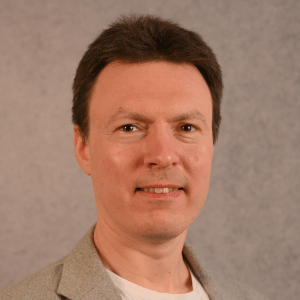
Aliaksei Laureshyn
Sweden
Aliaksei Laureshyn is an associate professor in traffic safety at Lund University, Sweden. His core competence is within proactive (non-accident based) methods in safety analysis. Other research interests cover safety of vulnerable road users, and policy and practice within traffic safety management, both in mature contexts, and in low- and middle-income countries.
Aliaksei is a passionate educator about the Safe System approach to traffic safety. Besides regular classes at Lund University, he has been teaching traffic safety in different countries incl. China, Ghana, India, Tanzania, the United States, and Zambia.
Since 2021, Aliaksei acts as the editor-in-chief of the Traffic Safety Research journal.
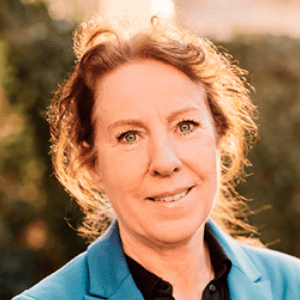
Sonja Forward
Sweden
Dr. Sonja Forward is a psychologist and a research leader at the Swedish Road and Transport Research Institute (VTI). Since 1992, she has led numerous national and international projects, developing extensive knowledge in the areas of sustainable travel and road safety.
Sonja's research covers many areas, but mainly mechanisms that affect behavior and how it can be influenced by behavioral change measures. She works using both quantitative and qualitative methods.
Sonja is the leading Swedish expert on driver education and traffic campaigns.
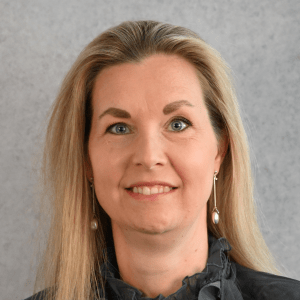
Hanna Wennberg
Sweden
Hanna Wennberg has her core research interest in policy implementation within traffic safety and sustainable transport, by societal actors as well as by companies and organisations, and with a focus on sustainability goal integration approaches.
Hanna always had an ambition to bring together perspectives from research and practice. She has developed several handbooks and tools for practitioners, for example on planning and design for pedestrians and cyclists as well as for systematic traffic safety implementation in public and private organizations. Her focus in research has also been on mobility of older people, social perspectives, and gender equality.
Practical information
Read more about travelling to and in Sweden, and other practical and useful information here.
Interest registration form
At the moment, we collect information about people interested to attend this course. Once we have reached a sufficient amount of potential participants, the course registration will be open. Please, leave your contact information using the form below to receive the latest updates about the course.
I am interested to eventually participate in this course. Please, send me updates about the upcoming course occasions.
Registration
Registration for the course is now open.
For practical reasons, the registration closes three weeks before the course start (deadline 12 April 2026).
After receiving your registration, we will contact you with further information regarding payments and other practicalities (invitation letter, search for accommodation, etc.).
In case you have any questions related to the course, reach out to us at contact@lund-tsa.se.